BSNMUN Forums 2022
General Assembly
The General Assembly (GA) occupies a central position as the chief deliberative, policymaking and representative organ of the United Nations. The General Assembly comprises all 193 Member States of the United Nations. Each Member state has one vote and shall have not more than five representatives in the General Assembly.
The General Assembly is composed of three Committees at BSNMUN that meet separately in the two days of the conference. Each Committee drafts and debates resolutions concerning its mandate, that includes vast topics related to peace, security, disarmament, development, environment and human rights.
Economic and Social Council
The Economic and Social Council (ECOSOC) is one of the six main organs of the United Nations. It is the principal body for coordination, policy review, policy dialogue and recommendations on economic, social and environmental issues, as well as for implementation of the internationally agreed development goals. Throughout the conference, the ECOSOC will discuss two topics and compose resolutions.
Security Council
The United Nations Security Council (SC) is one of the principal organs of the United Nations and is charged with the maintenance of international peace and security. Its powers include the establishment of peacekeeping operations, the establishment of international sanctions, and the authorization of military action. Under the Charter of the United Nations, all Member States are obligated to comply with Council decisions.
SC is composed of 15 members. In these five veto-wielding permanent members (P5)—China, France, Russia, the United Kingdom, and the United State—are included. In addition to the P5, there are 10 non-permanent members, with five elected each year to serve two-year terms.
The SC deals with very hot issues on the agenda that primarily concern international peace, stability and security and this is the reason why every solution is deeply discussed in order to be adopted. The rules of procedure are settled by the President and the Vice-President who are also in charge of guarantee that veto is not overused.
Human Rights Council
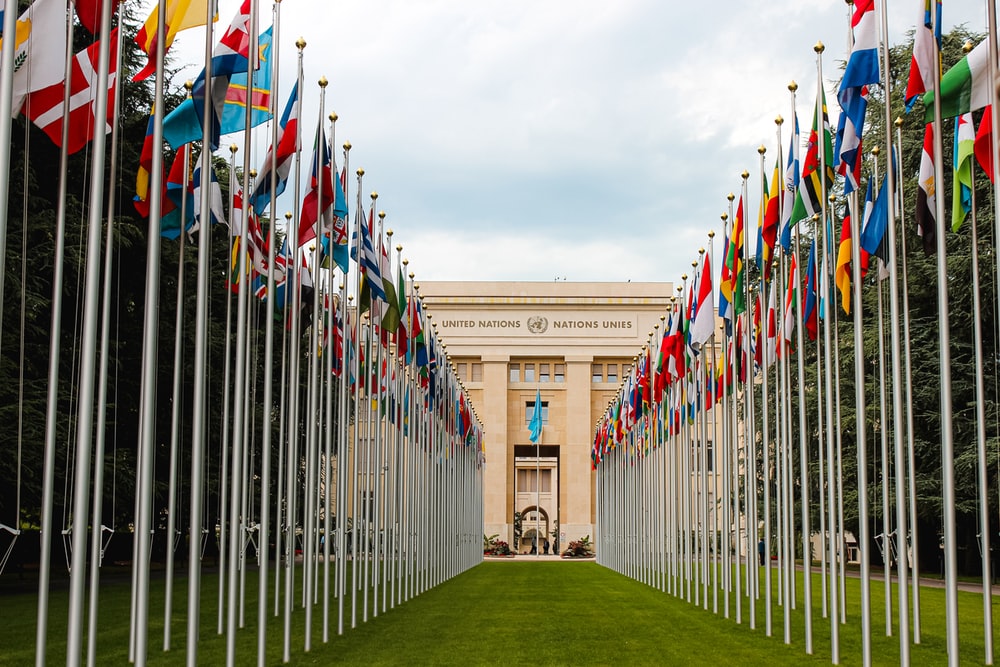
The Human Rights Council (HRC) is an inter-governmental body within the United Nations system made up of 47 States responsible for the promotion and protection of all human rights around the globe. It has the ability to discuss all thematic human rights issues and situations that require its attention throughout the year. It meets at the UN Office at Geneva.
HRC at BSNMUN will consist of two Commissions, which will debate their issue on the first day of the conference. During the second day of the conference, both Commissions will join together to discuss both topics during a Plenary Session, which will be led by the President of HRC.
International Court of Justice
The International Court of Justice (ICJ) is the judicial organ of the United Nations. 193 States are currently Members of the United Nations and recognize as compulsory the jurisdiction of the Court. The Court’s role is to settle, in accordance with international law, legal disputes submitted to it by States and to give advisory opinions on legal questions referred to it by authorized United Nations organs and specialized agencies.
The court is composed by the Presidency (Head of the ICJ, President of the ICJ and Vice-President), the Registry, four advocates (two per party) and an odd number of judges varying between 15 and 19.
A judge must be a person of high moral character, who possess the qualifications required in their respective countries for appointment to the highest judicial offices, or are jurisconsults of recognised competence in international law. Once elected, a Member of the Court is a delegate neither of the government of his own country nor of that of any other State. Unlike most other organs of international organisations, the Court is not composed of representatives of governments. Members of the Court are independent judges whose first task, before taking up their duties, is to make a solemn declaration in open court that they will exercise their powers impartially and conscientiously.
 BSNMUN